Local Insights
Lake Granbury Short-Term Rental Laws: What Every Texas Homeowner Needs to Know Before Listing


Updated on:
July 24, 2026

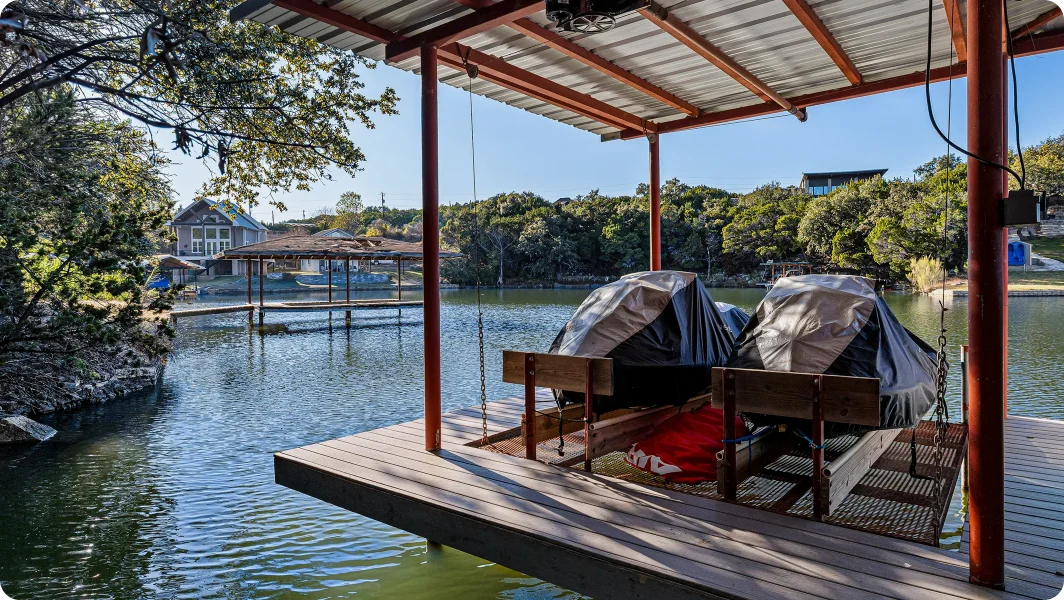
Lake Granbury draws weekend traffic from the entire Dallas–Fort Worth metroplex, just 40 miles southwest. That proximity makes it one of the more consistent lake markets in North Texas for vacation rental demand. Before you list, though, there's red tape most new hosts underestimate: what the City of Granbury and Hood County actually require before you can legally operate.
Yes, but it requires a permit first. The city's short-term rental (STR) ordinance (Ordinance 22-32, adopted July 2022 and amended twice since) makes it unlawful to rent, advertise, or allow a residential property to operate as an STR without an active permit from the city.
That applies no matter how the booking comes in: Airbnb, Vrbo, or a direct reservation.
As of January 2, 2024, Granbury City Council removed the requirement for a Specific Use Permit on residential-zoned properties, which had previously added a separate, slower bureaucratic step on top of the standard short-term rental permit. That's a genuine simplification compared to the process before 2024.
The city's code groups them together in the same ordinance section, but a Short-Term Rental and a "Bed & Breakfast, Hosted" are not the same thing.
Most Lake Granbury vacation rental owners fall under the STR category, not the B&B one, and the rest of this guide focuses on that.
Most summaries of the ordinance stop at the three-bedroom cap. The zoning use table goes further. Its supplemental standards state that short-term rentals (both residential unhosted and commercial) and hosted bed and breakfasts are "limited to the area shown in the Historic Preservation Overlay and Historic Compatibility Overlay Districts." That language appears three separate times in the code, once for each lodging category — the city clearly means it.
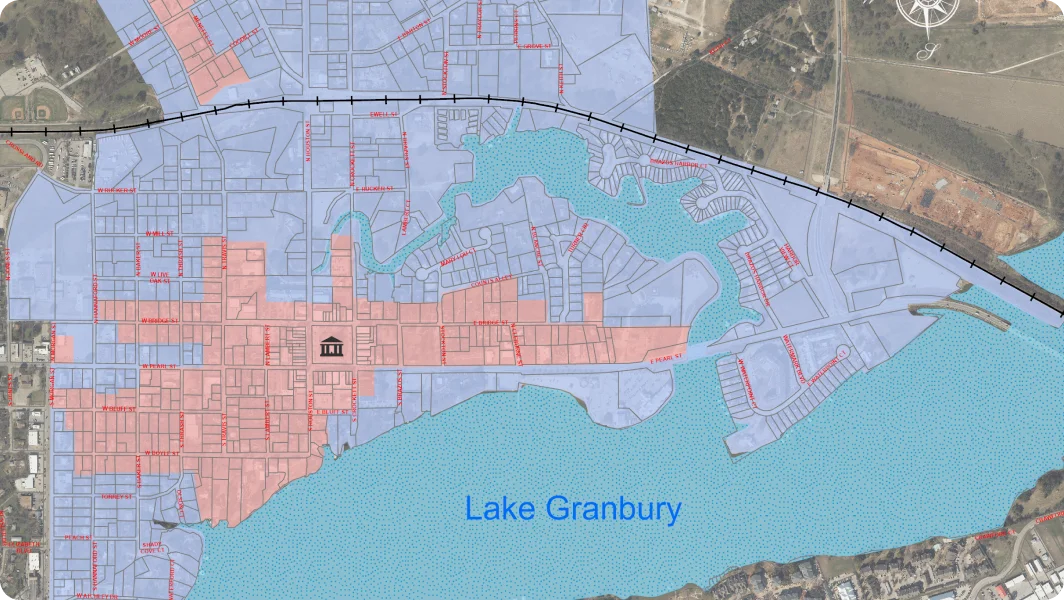
You can see the exact language yourself in the city's use table and supplemental standards, under Article 4, Section 4.2, items 7(g), 17(k), and 18(i).
A base zoning designation that allows vacation rentals doesn't automatically mean the use is available on every lot in that district. Many residential districts do list it as a permitted use — but the property may also need to sit inside the mapped Historic Preservation Overlay (HPO) or Historic Compatibility Overlay (HCO) boundary.
The code itself doesn't settle whether Lake Granbury's shoreline neighborhoods fall inside that boundary. Check your specific parcel against the overlay map before you treat a permit as a given.
Zoning categories and overlay districts can change the specifics, so pull up your exact zoning classification before applying. This matters most if your property sits near the historic downtown area rather than a standard lake-area subdivision.
The city's Zone Lookup tool lets you check a specific address directly. If anything about the result is unclear, follow up with the Community Development Department.
If your property has more than three bedrooms, the standard residential permit likely won't cover it as written. Properties zoned for commercial use are allowed up to seven bedrooms instead of three, so see whether that classification applies to yours before assuming you're stuck at the residential cap.
Otherwise, the formal path is a variance request to the city's Zoning Board of Adjustment. Under Texas Local Government Code § 211.009, the board can grant a variance from a rule like the bedroom cap — but only if strict enforcement would create an "unnecessary hardship" and only if the variance wouldn't run against the public interest.
That's a case-by-case legal standard, not a guarantee.
The board's own meeting records show it regularly grants variances for things like setbacks and accessory structures. Whether it would treat a bedroom-count cap the same way is a separate question and one worth raising directly with Community Development rather than assuming your way into it.

The permit fee itself costs $200 and is issued through the city's OpenGov portal. It expires one year after issuance and must be renewed, with a fresh application each time.
A complete application needs the following:
That person must be reachable at all times while guests are on the property and able to be physically present within one hour of a call from the city. If you're managing the property yourself from out of state, this alone is often the reason owners bring in a local co-host or property manager.
Before the permit is approved, the city inspects the property for basic health and safety compliance. A separate annual inspection fee of $100 per year applies to properties with fewer than 20 rooms, on top of the base permit fee.
A few operational rules worth knowing:
Operating without a valid permit carries a fine of up to $2,000 per day, with each day treated as a separate violation, and the city can disconnect utility service on top of that.
Vacation rentals in Granbury owe two hotel occupancy taxes stacked on top of each other:
That's 13% combined for a property inside city limits, in addition to whatever platform fees apply.
Airbnb automatically collects and remits the 6% state tax on every Texas booking. However, that's only the state's share — the city's 7% is a separate matter.
We checked Airbnb's official list of Texas jurisdictions where it also collects local tax, and Granbury isn't on it. Austin, Houston, San Antonio, and even the smaller nearby town of Glen Rose are listed; Granbury is not.
In practice, that means the city's 7% almost certainly isn't being collected for you automatically. It falls on you to register with the city and remit it directly — confirm your specific setup with the City of Granbury's tax office rather than assuming the platform has it covered.
This distinction matters more here than in most markets, because Lake Granbury's shoreline extends well past the city boundary. A property can sit directly on the lake and still fall outside Granbury city limits, in unincorporated Hood County, where the city's permit ordinance doesn't apply in the same way.
Unincorporated Hood County has its own development permit rules, structured differently from the city's ordinance, and what applies can vary by location within the county. Don't assume city rules carry over — and don't assume no permit is needed either.
A neighboring property isn't a reliable guide, since two lots a short distance apart can fall under different processes. The county and the city are separate regulatory bodies, so this is one to call Hood County directly and nail down.
Several of the lake's most established communities have their own STR restrictions that go beyond whatever the city or county requires; a valid permit doesn't override a restriction in your HOA's governing documents.
Communities that have historically taken a harder line on vacation rentals include Pecan Plantation, Harbor Lakes, and The Peninsula, where rules can vary by section. A neighbor's listing isn't proof that yours would be allowed — confirm directly with the HOA board. Other communities, including Canyon Creek, Bentwater, and Oak Trail Shores, have generally been more accommodating.
HOA boards do revisit these rules as the practice becomes more common in an area, so treat this year's answer as current, not permanent. Read your specific CC&Rs before you list, not after a complaint.

A few patterns show up repeatedly with new Lake Granbury hosts:
Everything above, in one place:
Yes. If your property is inside Granbury city limits, you need an active short-term rental permit from the city before you advertise or accept bookings, regardless of which platform the booking comes through. Operating without one carries a fine of up to $2,000 per day. If it's in unincorporated Hood County, the city's permit doesn't apply, but the county has its own development permit rules to check instead.
The base permit fee is $200, issued through the city's OpenGov portal. It's valid for one year and requires a fresh application and fee to renew. A separate annual inspection fee, typically around $100, applies on top of that.
18 hours. That's unusually permissive compared to most cities, which set minimums of one or several nights.
Only the state's 6%. Granbury isn't on Airbnb's list of cities where it also collects the local 7% — that part you register for and remit yourself.
Depends on the parcel. Inside city limits, the $200 STR permit applies. Outside, in unincorporated Hood County, the county's own permit rules apply instead. Confirm with Hood County directly.
Yes. The city's permit doesn't check your HOA's rules, and a valid permit doesn't override them. Some communities (Pecan Plantation, Harbor Lakes, The Peninsula) are stricter than others — read your CC&Rs before you list.
Not the standard residential permit — that caps at three. Commercial-zoned properties can go up to seven, or you can request a variance, though it's not guaranteed. Either way, the property still needs to sit inside the HPO or HCO overlay.
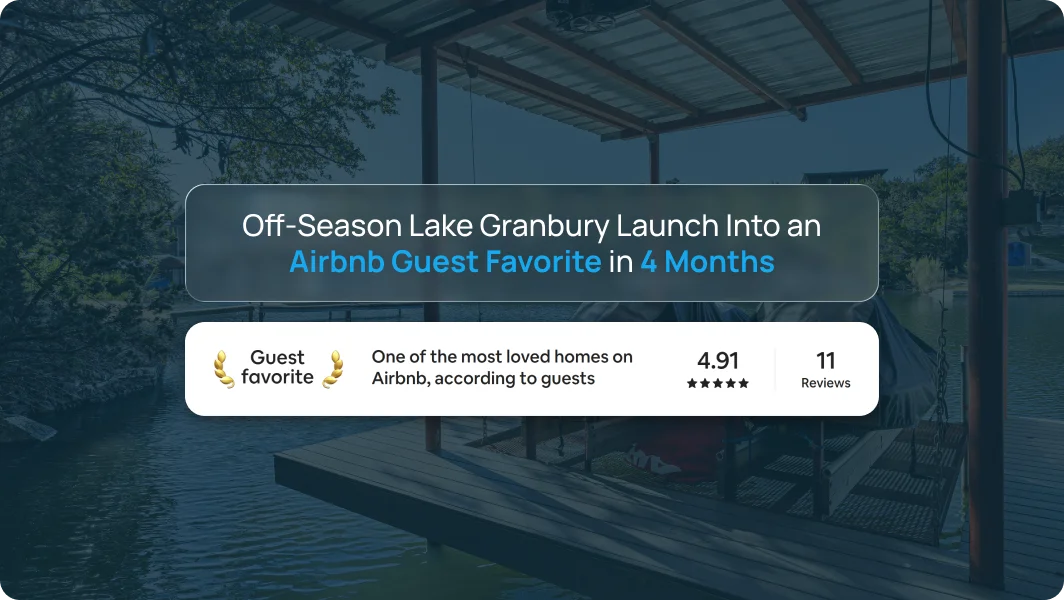
Lake Granbury is still a solid market once the compliance work is done. We managed a lake home here for owners Logan and Erin Verrett, and it's a good example of what that work looks like once it's handled properly.
They launched on August 15, 2025, one of the slowest months for Texas lake rentals, and the calendar sat empty for the first 30 days: no bookings, no reviews. By December, the property had earned Airbnb's Guest Favorite badge and generated $11,245 in revenue across 16 bookings, with the weekend rate climbing from $160 to $250 along the way. The full case study covers the pricing and positioning strategy behind that turnaround.
This guide is for informational purposes only and does not constitute legal advice. Short-term rental regulations change frequently. Verify current requirements directly with the City of Granbury Community Development Department, Hood County, and a qualified Texas attorney before listing your property.
Most of the compliance issues we see on Lake Granbury come from owners who got the big-picture legality right (short-term rentals are allowed) but missed one of the five patterns above. None of those show up in a quick search; they show up after a fine or a complaint.
If you're weighing whether to self-manage a Lake Granbury property or bring in professional management, we're happy to walk through what we handle versus what stays in your hands.



%20Rules.webp)





Guest Experience &
After-Hours Support: