Local Insights


If you own a Florida property and you're thinking about listing it on Airbnb or Vrbo, here's the reality: vacation rental hosts in Florida face more compliance layers than almost any other state. The gap between "I listed it" and "I got fined" can be a matter of weeks.
We manage over 300 vacation rental properties across the United States at Triad Vacation Rentals. Florida is the market where we see the most compliance confusion. Hosts come to us after fines, missed registrations, and insurance gaps that nobody warned them about. This guide covers what they should have known from the start.
Yes. Florida is one of the most Airbnb-friendly states in the country. A 2011 state law prevents cities from banning short-term rentals outright, which is why you'll find active vacation rental markets everywhere from Miami Beach to Panama City Beach to the Disney corridor.
But "legal" and "compliant" are two very different things. Having the right to operate doesn't mean you can list tomorrow without paperwork. You need to satisfy the state licensing requirement, your local registration requirement, your tax obligations, and whatever your HOA says. Miss any one of those layers and you're looking at fines that can run into thousands of dollars per day.
The rest of this guide covers exactly what those layers are.
Understanding the history saves a lot of confusion about why the rules are the way they are.
Florida passes F.S. 509.032(7)(b), preventing cities and counties from banning vacation rentals or capping how often or how long guests can stay. The state told every Florida city: you cannot ban Airbnb. This is what makes Florida one of the most host-friendly states in the country.
The catch is that any local ordinance already on the books before June 1, 2011 is grandfathered. Miami Beach is the clearest example. Its restrictions predate 2011 and remain fully enforceable today, state law or not.
The 2011 law was too broad. Cities had no tools to deal with party houses, noise complaints, or parking problems. The Legislature amended it: cities can't ban vacation rentals or cap rental nights, but they can regulate how you operate. Inspections, noise rules, occupancy limits, local registration. Most Florida cities built their enforcement programs around this.
The Legislature passes SB 280, which would have centralized all vacation rental regulation under DBPR and further limited local control. Governor DeSantis vetoes it in June 2024. The existing framework stays intact.
State preemption intact, local rules very much alive, enforcement tightening across major markets. You need to satisfy both the state and your local government. Neither one alone is enough.
.webp)
Before you list, before you set a price, before you take a single booking: you need a state vacation rental license from the Florida Department of Business and Professional Regulation (DBPR).
This applies if you rent for stays of less than 30 days more than three times per year. It does not matter whether you use Airbnb, Vrbo, your own website, or word of mouth. The license is required under Chapter 509, Florida Statutes.
Florida issues two vacation rental license types:
Apply online at myfloridalicense.com. The application fee is $50 for new applications. The annual renewal fee is calculated as $150 base + $10 per rental unit + $10 HEP fee, so a single-unit property runs $170 per year at renewal ($220 the first year). Processing takes a few days to a few weeks, longer if your property requires a physical inspection. The full fee schedule is at DBPR's lodging fees page.
Here is what the annual renewal fee looks like at different portfolio sizes:
Once you have it, your DBPR license number must appear in every listing you publish. Platforms are increasingly blocking listings that don't display a valid number. Enforcement agencies also scan listing platforms to find non-compliant properties.
What happens if you skip it: DBPR fines reach $1,000 per day. In Miami, city-level penalties go up to $2,500 per day. In Orlando, fines start at $250 per day and escalate to $1,000 for repeat violations.
Most Florida vacation rental owners get their DBPR license and assume they're done. They're not.
Almost every Florida city or county with active enforcement requires a separate local registration, business tax receipt, or certificate of use on top of the state license. Different document, different fee, different renewal timeline, often a different inspection.
What this costs and what's required varies by city. The city-by-city breakdown below covers the major markets.
Running a Florida vacation rental means three separate tax obligations stacking on top of each other.
The trap: Airbnb collecting state sales tax does not mean your taxes are handled. Tourist Development Tax collection varies by county. In some counties the platform handles it. In others, you must register with the county tax collector and remit it yourself every quarter, whether or not you had any bookings. Missing a filing triggers backdated liability plus penalties of 25% or more of the amount owed. The Florida Department of Revenue maintains a full list of county TDT rates and remittance requirements, including the DR-15TDT form with every county's exact rate.
For direct bookings outside the platform, you collect and remit everything yourself.
Florida has no state income tax, which is a real advantage over states like California or New York. Federal obligations still apply.
%202.png)
This is the piece most compliance guides skip, and it's the one that quietly kills break-even math faster than any fine.
If you are renting your Florida property exclusively as a vacation rental, you need a policy written specifically for short-term rental use. Not a standard homeowner's policy, not a landlord policy. What to look for:
If you plan to use your Florida property personally and rent it the rest of the time, your standard homeowner's or second-home policy almost certainly does not cover you during rental periods. Most carriers exclude commercial rental activity entirely. If a guest is injured, if there's a fire, if a hurricane hits while guests are checking in — and you're insured as a second home rather than a vacation rental — expect the claim to be contested or denied.
Florida's post-hurricane market has made this worse. After Helene and Ian, premiums jumped significantly in coastal markets, wind and hurricane deductibles increased, and some carriers pulled out of short-term rental properties entirely. You need a policy that explicitly covers both personal use periods and rental periods, with written confirmation that neither voids the other.
Florida vacation rental owners in coastal Pinellas and Lee counties have reported insurance costs doubling after major storms. In some cases that turned previously profitable rentals cash-flow negative overnight. Know your number before you commit.
Florida's state preemption law protects your right to operate a vacation rental against city and county ordinances. It does not protect you against your HOA or condo association.
If your condo association's bylaws prohibit short-term rentals, that ban is fully enforceable. Your DBPR license is irrelevant. The state preemption is irrelevant. HOA restrictions are contractual obligations that exist entirely outside the state regulatory framework. Violations can result in fines, liens on your property, and legal action from your association, not the city.
Before you list, read your CC&Rs. Not skim them — read them. Look specifically for language around rental restrictions, minimum stay requirements, and any approval process the association requires.
We have seen Florida homeowners lose their ability to operate a vacation rental not because of anything the city did, but because of a clause in their condo documents they never read. It happens more than most people expect.
If you're planning to use your property personally and rent it the rest of the year, Florida's seasonal demand pattern matters more than in most states. Florida doesn't have one season. It has several, and they vary sharply by region.
The seasonal curve varies significantly by region:
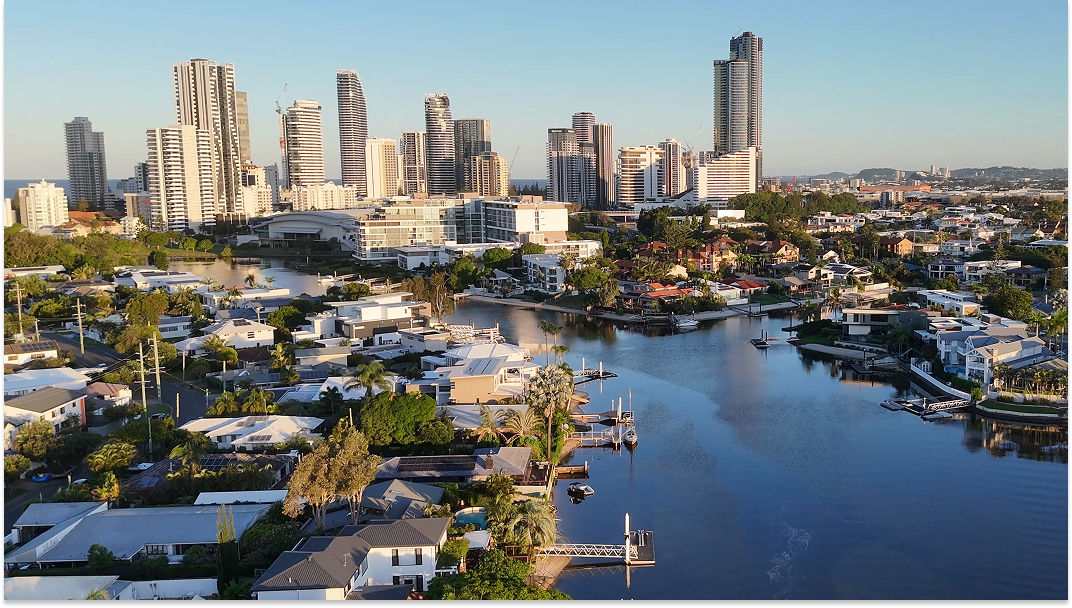
State licensing and taxes apply everywhere in Florida. What changes by city is how difficult local compliance is, how aggressively it's enforced, and what the financial exposure looks like if you get it wrong.
Miami Beach operates under pre-2011 ordinances that survive the state preemption. Short-term rentals under six months and one day are prohibited in most residential zones. Where vacation rentals are permitted, you need a Business Tax Receipt, a Resort Tax Certificate, and a Certificate of Use before taking a single booking.
Fines for operating in a prohibited zone reach $20,000 per violation. This applies to properties advertising or renting in areas where vacation rentals are outright banned — not to standard permit violations, which carry lower penalties. Code Compliance actively monitors Airbnb and Vrbo for unlicensed listings.
Miami Beach vacation rental owners also carry one of the highest total tax burdens in Florida: 6% state sales tax plus 7% Miami-Dade TDT plus Miami Beach municipal resort tax plus discretionary surtax. The combined rate is among the highest in the state.
This market requires a clear distinction. Inside Orlando city limits, the rules are strict: the host must be present during guest stays, only one booking is allowed at a time, and no more than 50% of bedrooms can be rented. These rules make whole-home vacation rentals essentially non-viable within the city.
But most of what people call "Orlando vacation rentals" are not in Orlando city limits. They're in Orange County, Osceola County, or Polk County, where whole-home rentals have operated normally for decades. If someone tells you they're buying an "Orlando vacation rental," ask exactly which county. The answer changes everything.
Fines within city limits: $250 per day, up to $1,000 for repeat violations.
Tampa is the most straightforward compliance path among Florida's major markets. Standard operational requirements apply — registration, occupancy limits, noise rules — without the zoning complexity of Miami Beach or the city/county confusion of Orlando. Hillsborough County registration and a Business Tax Receipt are the core requirements.
Fines: $500 to $1,000 per day for non-compliance.
Fort Lauderdale runs one of the most detailed vacation rental compliance programs in the state. Noise monitoring devices are required in some cases. Parking standards are strictly enforced. In-unit compliance postings are mandatory. The program is thorough and enforcement is active.
Fines: up to $1,000 per day.
Key West is a premium resort market where the bigger risk is often your building, not the city. HOA and condo association rules in Key West frequently exceed what the city requires. Some buildings effectively ban vacation rentals regardless of what Monroe County permits. Check your condo documents before assuming city rules are the only thing that matters.
Jacksonville is the most permissive major city in Florida for vacation rental operators. Regulations exist but enforcement intensity is low compared to South Florida markets. Duval County registration is the primary requirement.
Walton County requires its own Vacation Rental Certificate before you advertise the property. Not after you take bookings, not while you're getting set up. Before. Fines for operating or advertising without a valid certificate run up to $500 per day. Walton County actively pursues enforcement during peak season. Budget approximately $350 to $400 annually for combined state and county licensing costs. For a closer look at the Destin market and what drives bookings there, see our Destin guide.
The 30A corridor — Seaside, Rosemary Beach, Alys Beach, Santa Rosa Beach — falls under the same Walton County vacation rental certificate requirement as Destin. The difference is the market itself. 30A attracts a higher-end traveler, ADR is significantly above the Destin average, and competition for premium weeks is intense. HOA restrictions vary widely by community. Some 30A neighborhoods have minimum stay requirements that exceed county rules, so check your specific community's governing documents before listing.

If your Florida property has a pool or sits within 150 feet of open water, this applies to you.
Florida's 2026 legislative session debated a significant upgrade to vacation rental pool safety requirements. House Bill 79 proposed that any licensed vacation rental near water must have at least one of the following: exit alarms on doors and windows leading to water, a safety pool cover, a self-latching pool gate, or barrier fencing. The bill passed the House but the Senate companion bill (SB 658/608) died in March 2026. HB 79 did not become law in its 2026 form.
The existing Residential Swimming Pool Safety Act (Chapter 515, F.S.) still applies. Pools at properties built after 2000 must have at least one safety feature.
The legislation will return, and the liability exposure exists regardless of the current law. Florida courts have sided with families in drowning negligence cases against vacation rental owners and platforms. Installing these features is sound risk management independent of what the statute currently requires.
The state license is step one, not the finish line. Local enforcement notices arrive weeks or months after you start operating, when the city does a sweep or a neighbor files a complaint.
Airbnb handles state sales tax. It does not automatically handle TDT in every county. Register with your county tax collector directly and confirm what the platform remits on your behalf. Don't assume.
The state preemption does not protect you from your condo association. Cease-and-desist letters from HOAs arrive without warning. Read the CC&Rs before your first booking, not after your first complaint.
A property inside Orlando city limits — where the host must be on-site and whole-home rentals face strict limits — is a completely different situation from Kissimmee or Davenport in Osceola and Polk counties, where most Disney-area vacation villas actually operate. Know which jurisdiction you're in.
Florida requires your DBPR number in all advertising. Most cities with local registration programs require that number too. Platforms scan for missing numbers and remove non-compliant listings.
A second-home policy does not cover you during rental periods. If a guest is injured and you're on the wrong policy, the claim gets denied. Get this sorted before your first booking, not after your first incident.
If you rent for stays under 30 days more than three times per year, yes. If you advertise the property publicly as a rental — even before you've hit three bookings — DBPR considers it a public lodging establishment. The threshold is lower than most people assume.
For state sales tax on platform bookings, yes. For Tourist Development Tax, it depends on your county. Some counties have platform agreements, others don't. For any direct booking, you handle everything yourself. Check with your county tax collector directly.
Enforcement is complaint-driven and platform-scanning based. Your neighbor may not have received a complaint yet. When they do — or when the city runs a sweep — the exposure is significant. A lien on your property for unpaid fines is recoverable from a sale, which affects your ability to refinance or sell.
If the restriction was in the documents when you bought, it was always enforceable — you just may not have known. If the HOA changes its rules after you've been operating, that's a complex legal question involving grandfathering rights. Either way, it's a conversation for a Florida real estate attorney.
Don't ignore it. Florida enforcement notices typically have a 10 to 30 day response window. Failing to respond escalates the fine. Read the notice carefully, understand which requirement you've allegedly violated, and come into compliance. In most cases, demonstrating compliance resolves the issue without the maximum penalty applying.
Yes. Florida does not require you to live in the state to hold a DBPR vacation rental license. But out-of-state ownership creates two practical obligations. First, most Florida cities require a designated local contact person who can respond to complaints within 30 to 60 minutes. That person needs to be physically local. Second, some markets are effectively off-limits for non-resident owners: Orlando city limits requires the host to be on-site during guest stays, which makes whole-home vacation rentals non-viable there. The Disney-area market in Orange and Osceola counties has no such restriction.
One DBPR license can cover multiple properties of the same type. A single Vacation Rental Dwelling license covers multiple houses, townhouses, or duplexes. A single Vacation Rental Condo license covers multiple condo units. You cannot mix both types under one license. If you manage houses and condos, you need two separate DBPR licenses. Local registrations are always per-property regardless of what the state license covers.

Work through this before your first booking. Each item represents a real enforcement or liability exposure if it's missing.
Most of the Florida homeowners who contact us do so after their first enforcement notice. By that point they've already paid a fine, scrambled to get their local registration, or discovered their insurance wouldn't cover a guest incident. None of that had to happen.
Florida's vacation rental compliance requirements are manageable. DBPR renewals, county tax filings, local registration updates, HOA monitoring, insurance, inspection scheduling. But they don't manage themselves, and the cost of missing any one piece is disproportionate to the effort of getting it right.
We hear from owners who've had bad experiences with property management companies. Handed over their listing, lost control of pricing, watched their ratings drop, paid fees they didn't fully understand. That's a real problem in this industry, and it's worth asking the right questions before you sign anything.
Triad Vacation Rentals manages vacation rental properties across the United States. If you own a Florida property and want to talk through what professional management actually looks like — what we handle, what you stay in control of, and what the fees really are — we're happy to have that conversation.
This guide is for informational purposes only and does not constitute legal advice. STR regulations change frequently. Always verify current requirements with local government authorities and consult a qualified Florida attorney before listing your property



%20Rules.webp)





Guest Experience &
After-Hours Support: