Case Studies


We ran two short-term rentals side by side in western North Carolina: a rent-by-the-room property in Asheville and a whole-home cabin in Maggie Valley. They earned almost identical revenue, but one took a fraction of the work to run.
If you're deciding between renting individual rooms or renting a whole house as a short-term rental: rent the whole house. In our head-to-head experience, the two models produced nearly the same revenue, but the room-by-room model demanded near-daily cleanings, constant guest communication, and dramatically higher upkeep costs to get there. Same top line, far more effort and expense underneath it, and meaningfully less profit during the management period. The rooms property's investment result was ultimately saved by its sale, not by its operations. The whole-home rental was more profitable the entire time and far easier to run.
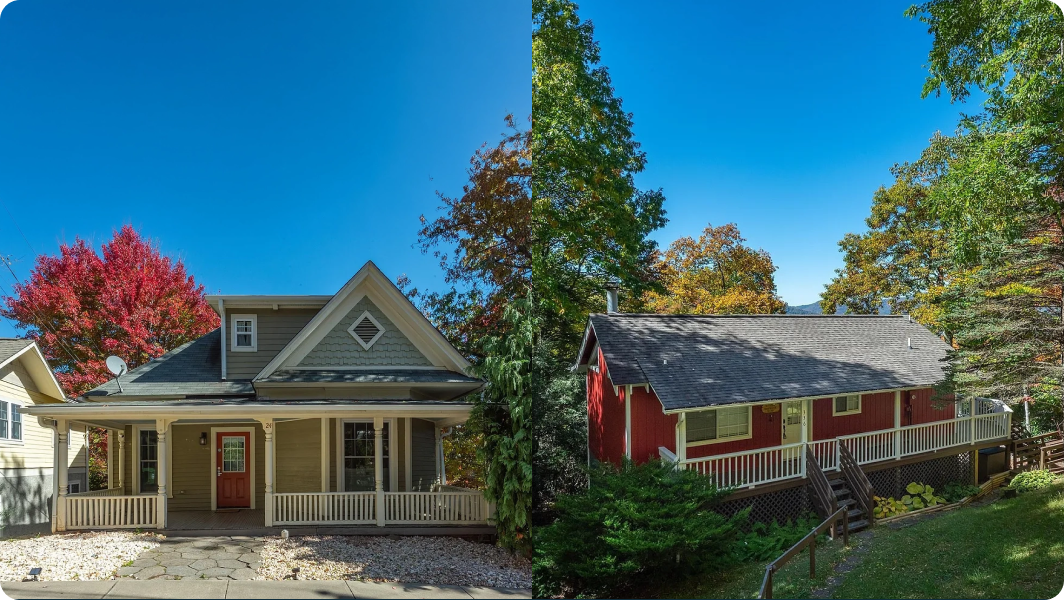
Both are fully documented in public sales records, so you can verify everything at the links above. Both were furnished and listed to a similar standard and run side by side, about as close to a controlled experiment as you'll ever get in real estate.
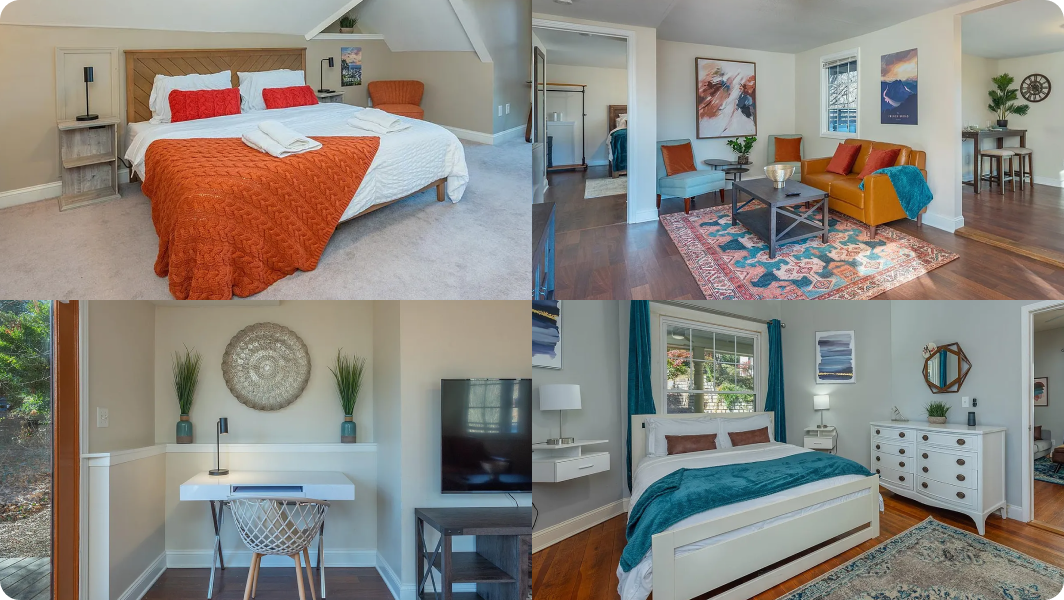
A century-old duplex in Asheville's Chicken Hill neighborhood, split into a basement unit and a two-story upper unit.
Asheville has some of the strictest short-term rental regulations in the Southeast. The basement, a 1br/1ba unit, had to rent at a 30-day minimum; nightly stays weren't allowed there. The upper unit couldn't rent as a whole home inside city limits, so it operated as individual bedroom rentals instead, with guests sharing the kitchen, living room, dining room, and laundry.
With less whole-home competition inside city limits, individual rooms actually did perform well in Asheville, better than they would in most markets.
The upper unit had a second living room, and bedroom count is the single biggest driver of short-term rental revenue. Blake and Ted added a wall and a door, a few thousand dollars all in, and turned the 2br/2ba into a 3br/2ba while keeping the primary living room intact.
We spent a few thousand dollars on a wall and a door. That one decision paid for itself faster than almost anything else we've done in this business.

Ted Meyers
Co-Founder, Triad Vacation Rentals
A cheap wall that creates a legitimate extra bedroom is one of the highest-ROI moves in short-term rentals, and it's something we look for in every property we evaluate.
With the wall finished, Asheville Suites had three upstairs rooms plus the basement. The basement was rented for $3,000/month on Furnished Finder during the peak of COVID travel nursing and stayed booked, almost. One vacant month reinforced a lesson: a single empty month is revenue you never get back.
The three upstairs rooms each earned $18,000 to $25,000 per room per year. But three rooms booking independently meant hundreds of check-ins a year, and every room turnover wasn't just cleaning a bedroom, it was re-cleaning the shared kitchen, living room, bathrooms, and laundry that every guest touched. Cleaners were at the property almost every single day. Damage in those shared spaces was its own headache: with three unrelated guests using the same kitchen, nobody ever broke the glass or scuffed the wall, and there was rarely a clean way to figure out who to charge.
By the end of the first year, Asheville Suites had brought in about $85,000 combined between the basement and the three rooms, a strong top line on paper. Behind that number: near-daily cleaning, three times the guest messages and check-in issues of a single unit, and constant friction between strangers sharing a kitchen.
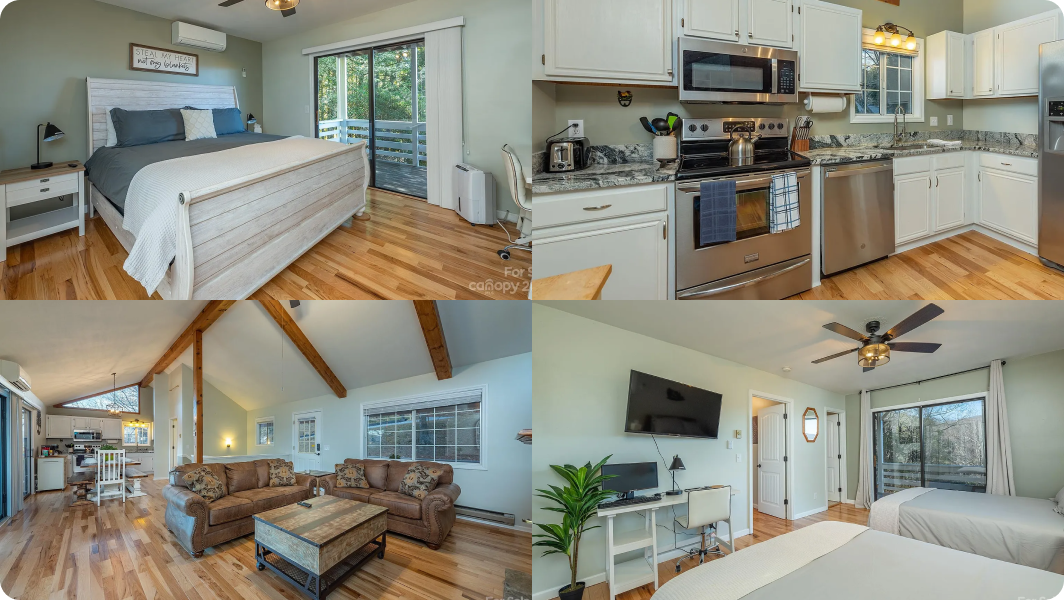
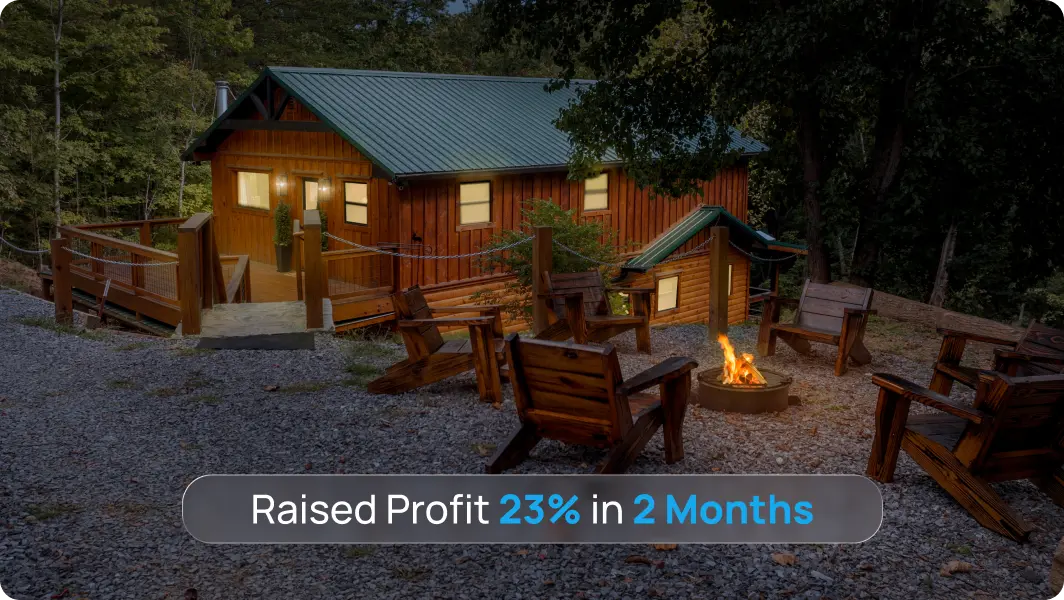
A mountain-view cabin about 40 minutes from Asheville ran the whole time as a whole-home rental.
Forty minutes away in Maggie Valley, none of Asheville's rules applied. Must BeHaven was rented as a whole home from day one, no workaround needed.
Guests booked the whole cabin for multi-night stays, so check-ins and cleanings were rare by comparison, and none of the shared-space problems that came with renting by the room ever showed up.
By the end of the first year, Must BeHaven had brought in almost exactly the same as Asheville Suites: about $85,000. When the cabin was later listed for sale, the listing itself advertised roughly $78K in bookings for its final full year, independent confirmation of the number.
Cleaning and upkeep consumed a huge share of Asheville Suites' revenue before anything else got paid. Must BeHaven kept a far larger share of the exact same top line. When two operating models produce the same revenue, the one that keeps more of it with a fraction of the effort wins by definition. Revenue is vanity; margin is sanity.
Both properties eventually sold well, but that's a separate story from how they performed as rentals. A good sale doesn't undo a hard couple of years of operations, and it's the operations an owner lives with day to day.
This isn't a lesson frozen in 2021. Over the past two years, a handful of owners have asked Triad to manage individual room rentals despite our advice in Pennsylvania and in New York City, both Manhattan and Brooklyn. A re-run of the experiment across very different markets.
In Pennsylvania, the room model underperformed almost immediately. At Triad's direction, the owner switched to renting the whole home, and the numbers recovered.
Manhattan and Brooklyn were the real test. If the room model works anywhere, it's dense urban markets like New York, with constant demand, guests accustomed to compact shared living, and strong nightly rates per room. It did alright there. But when those owners switched to renting the whole apartment, the same pattern showed up again: more profit for less work, with turnover and guest issues dropping off at the same time. The whole-unit math won even in the single most room-friendly market in the country.
Three markets, five-plus years of operating, the same conclusion every time. The room model's problem was never the market. It's the model.
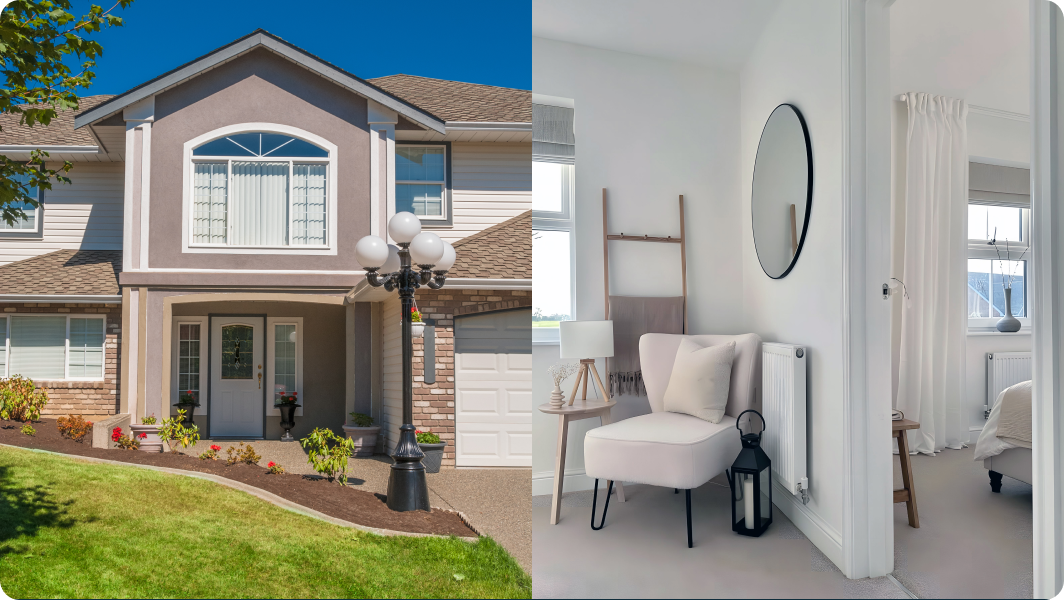
Renting individual rooms
Renting the whole house
Two properties, one very educational wall, and re-confirmations in Pennsylvania, Manhattan, and Brooklyn when owners insisted on trying the room model anyway. The rent-by-the-room model generates impressive revenue screenshots and disappointing bank deposits. For almost every owner, in almost every market, renting the whole house wins, unless local regulations leave no other option, and even then, only with cleaning costs and daily operational load priced in from the start.
If you're weighing the two models for your own property, or you're already renting rooms and wondering why the deposits don't match the gross, we've lived both sides of it. Triad Vacation Rentals now manages 400+ properties across 40+ states, and we advise every owner against the rent-by-the-room model for exactly this reason.
A quick bonus note, separate from the operating story above, since how a property sells has little to do with how profitable it was to run.
Both properties sold in early 2024: Asheville Suites for $675,000 and Must BeHaven for $536,000, each delivering roughly a 35% annualized IRR over an approximately two-year hold, a 35% blended return across both. Don't judge the two by IRR alone. Must BeHaven earned its return the whole way through, solid operating profit year after year, then a strong exit on top. Asheville Suites did not; the constant cleanings and upkeep ate most of what it earned during the management period, and its investment result was ultimately saved by the sale.
A rising market can rescue a bad operating model once. It won't do it reliably, and it won't pay you anything while you wait. Operations is what pays you every month; the sale only pays you at the end, if the market cooperates.
Both purchases were financed at 100% of purchase price, zero down, which took over 100 calls to find. National lenders wouldn't touch the structure; local banks and credit unions would, since they hold loans in-house and can underwrite more creatively. Financing is one of the biggest levers on your returns as an investor, so it's worth calling the small banks, and calling a lot of them.
Two years of documented rental revenue also made both properties worth more, another payoff from taking the financing relationship seriously. Most banks require at least two years of operating history before they'll credit short-term rental income toward a property's value, and both properties cleared that bar with clean books, which helped them appraise and sell stronger for it.
Both exits at a glance: $1.1M+ in assets liquidated at a 35% blended IRR across the two properties.
Not necessarily. In our head-to-head test, Asheville Suites (rooms) and Must BeHaven (whole home) earned almost identical revenue, about $85,000 each in year one. Rooms can out-earn a whole home on paper in markets with limited whole-home competition, but the revenue gap wasn't there for us.
Because every guest touches shared spaces. Three independently booked rooms mean roughly three times the check-ins, and every turnover requires re-cleaning the shared kitchen, living room, bathrooms, and laundry, not just a bedroom. That drove near-daily cleaning at Asheville Suites versus a fraction of that at Must BeHaven.
Mainly when local regulations leave no other option, as in Asheville, where the upper unit legally couldn't operate as a whole home. Even then, factor in cleaning costs that run several times higher per revenue dollar and a much heavier daily operational load before committing.
It performs relatively better there than in most markets, given constant demand and guests accustomed to shared living. But when our Manhattan and Brooklyn owners switched from rooms to whole-unit rentals, the same pattern showed up: more profit for less work, even in the most room-friendly market in the country.
Adding a legitimate extra bedroom where the layout allows it. At Asheville Suites, a few thousand dollars for a wall and a door turned a 2br/2ba into a 3br/2ba, since bedroom count is the single biggest driver of short-term rental revenue.
Want a real revenue and profit projection for your property? Reach out to Triad Vacation Rentals, we'll run the numbers the way we run them on our own portfolio.




Guest Experience &
After-Hours Support: