Case Studies

Over three years, $84,000 disappeared from one of Lake Tahoe's finest vacation rentals. The house never changed. Everything around it did.
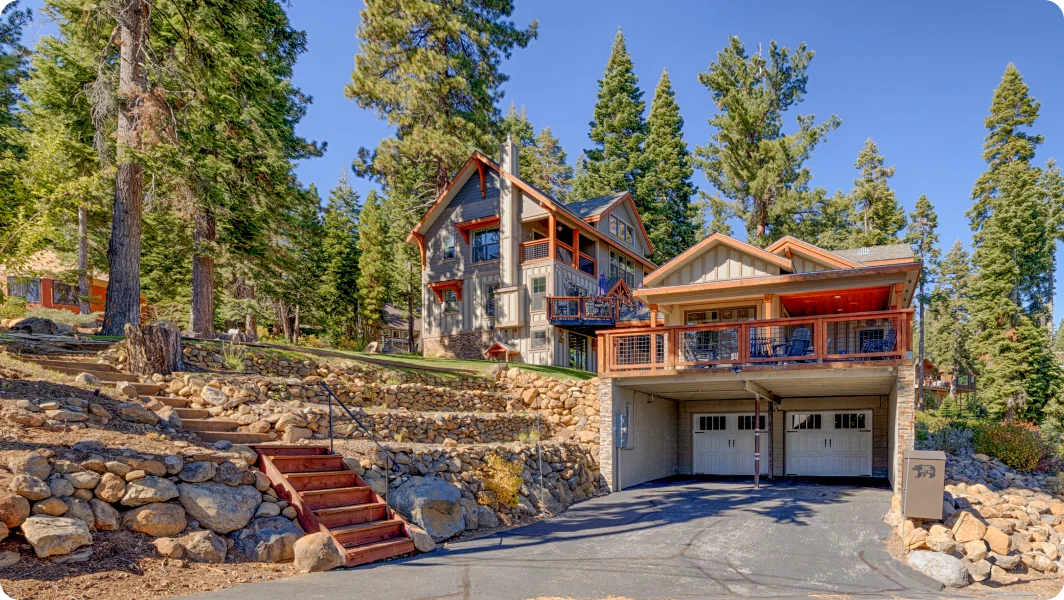
In 2022, the property peaked at $165,000. It never came close again.
By 2025, his 5-bedroom Carnelian Bay home was earning $81,000. The 170-degree lake views were still there. The private hot tub, the game room with the pool table and jukebox, the guest house, and the five exterior dining areas — all still there.
The property hadn't changed. The management model had stopped working for it.
Revenue down 51% over three years. Booked nights down 40%. ADR down 18%. Every metric, every year, in the same direction.
The broader North Lake Tahoe market saw modest softening in 2024–2025. Christopher was watching it happen in real time, neighboring properties holding steady while his kept sliding. The market played a role. But no market decline explains a 51% drop when comparable homes weren't seeing anything close to it. The scale and consistency pointed to management decisions compounding year after year.
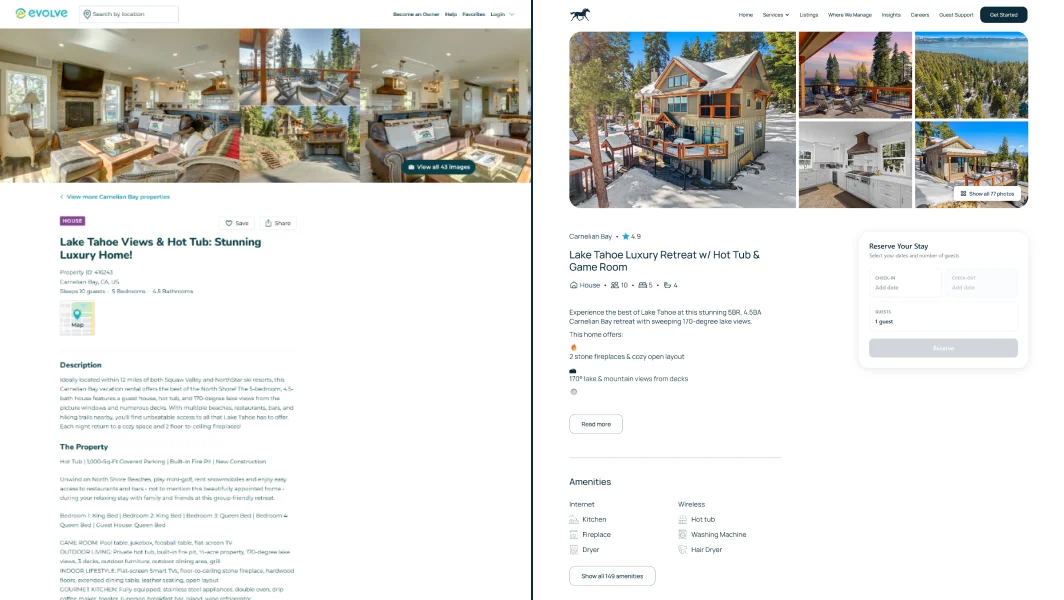
Christopher had three specific frustrations with his previous manager. Each one was costing him more than he realized.
No phone support. For an owner managing a high-value property remotely from San Francisco, that's not a minor inconvenience. It's a liability. When something goes wrong at a luxury rental, the window for managing it well is short.
Inadequate guest vetting. Without proper screening, a high-value property carries real risk. One bad stay can mean damage, a difficult claim process, and a listing that takes months to recover.
The third problem was pricing. The North Lake Tahoe market has genuine seasonality. Squaw Valley and Northstar are twelve miles away. Summer demand compresses into specific weeks. The gap between a well-priced peak night and a poorly priced one is significant. A flat-rate strategy leaves that money on the table every single year.
Each of these problems looks manageable in isolation. Over three years, they compound. $165k becomes $130k becomes $114k becomes $81k. Each year feels like a small step. Over three years, it's $84,000 gone.

Christopher had six weeks before the January 2026 launch date. Every decision in that window was made with one question in mind: what does this property actually need to perform at its level?
The first thing that changed was the listing photography. For three years, Christopher's January listing was showing summer photos. Guests planning a ski trip to Squaw Valley and NorthStar were landing on a property that looked like a summer rental. Two complete seasonal sets were shot, properly staged to support pricing confidence at higher ADR bands, not just aesthetics. By launch day, a guest planning a ski weekend was finally seeing a property that looked like one.
The listing description had the same problem. The previous version buried the property's best features under a generic title. A guest looking at a dozen Carnelian Bay listings had no reason to stop on this one. The rewrite led with what actually sells: 170-degree lake views, two stone fireplaces, a private hot tub and tub, and a game room with a pool table and jukebox. The guest house and five exterior dining areas were given proper prominence. The property Christopher owned on paper finally matched the property guests were seeing online.
Guest vetting was the frustration he'd raised most directly. ID verification within 48 hours of booking and a clear damage reporting procedure were added as standard. For a remote owner managing a high-value asset from San Francisco, that's not a procedural detail. It's the difference between sleeping well and waiting for a call.
Dynamic pricing was implemented for the first time. The North Lake Tahoe market has genuine seasonality, and three years of flat-rate pricing had cost him on every peak weekend that passed. Rates were calibrated for revenue efficiency during compressed demand windows, not maximum occupancy at any rate. Channel mix was weighted across Airbnb, Vrbo, Booking.com, and Triad's direct booking site to reduce overexposure during peak pricing windows.
None of these were complicated fixes. They were the basics, done properly, for the first time.
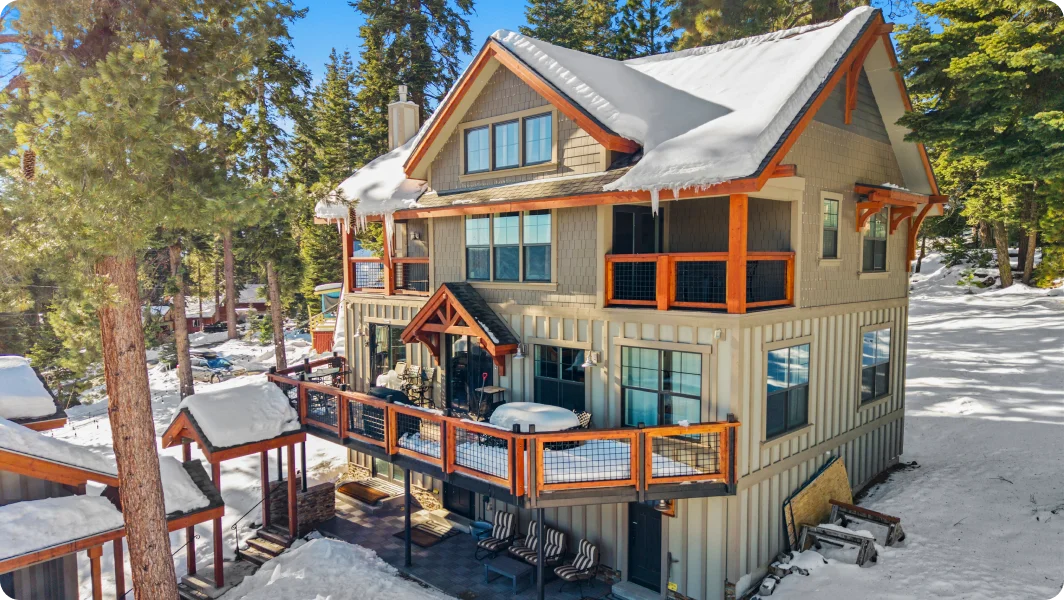
The property launched January 6, 2026. $38,108 in confirmed revenue is already on the books — completed winter stays plus bookings locked in through summer. While early pacing is strong, STR performance is still shaped by factors no manager controls. Weather, demand shifts, regulations. The objective isn't to eliminate volatility. It's to ensure the property outperforms its competitive set within those constraints.
Summer is already building. June, July, and August have 24 nights booked and $11,147 in confirmed revenue. Five months still to go before peak season. Under previous management, July was historically the property's strongest month, and it was still declining year over year. With dynamic pricing, an optimized listing, and proper seasonal photography in place, that trend is positioned to reverse.
Triad's internal target for 2026 is $150,000. That's an 85% increase over what previous management delivered in 2025. The early pacing supports it.

A vacation rental doesn't have to break down to underperform. Christopher's home was in excellent condition throughout the entire three-year slide. Nothing about the property itself caused it.
Managed decline is subtler than that. It looks like a slightly quieter July. A few fewer bookings in October. Nothing alarming on its own — until you look at three years together. It's a pricing strategy that stops adapting. It's a listing that made sense two years ago but hasn't been touched since. It's a guest screening process that's technically in place but not actually enforced. It's an owner who calls with a problem and gets a ticket instead of a person.
Each gap is individually defensible. Together, they create a property that looks competitive on paper but consistently underperforms in the market. The fix wasn't renovating the home. It was rebuilding how it was managed.
If you own a high-value vacation home and your revenue has declined year over year, even slightly. It's worth understanding why before another peak season passes.
Triad Vacation Rentals works with a select group of luxury property owners — typically remote owners with high-value homes who suspect their property isn't reaching its potential. If that sounds like your situation, a complimentary performance review focused on pricing strategy, listing execution, and channel positioning is a good place to start.


Guest Experience &
After-Hours Support: