Industry Insights
Bad Review on Your Airbnb Listing? Here's How to Remove It — and What Actually Works When You Can't


Updated on:
August 31, 2026


A bad review lands on your Airbnb listing, and the first instinct is to get it taken down. Before you spend hours on hold trying to make that happen, here's what actually protects your listing today: a calm, professional response.
Airbnb's review system is double-blind. Neither you nor the guest can see the other's review until both have submitted, or until 14 days pass after checkout. By the time a review actually appears, it's already locked in, which is part of why a bad one can feel like it came out of nowhere. That system runs in both directions: leaving reviews for guests matters just as much as responding well to the ones you receive.
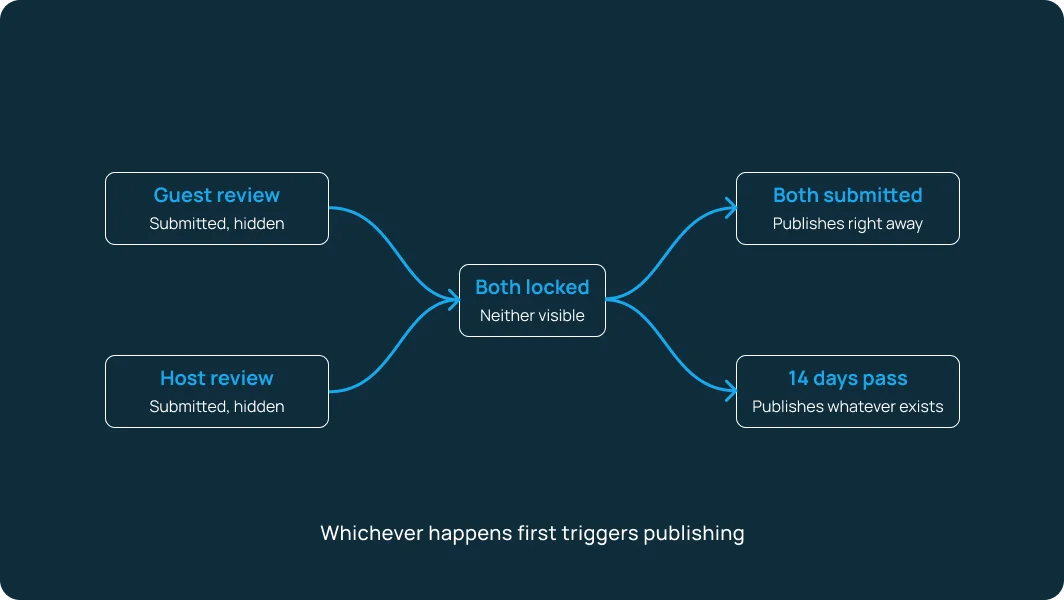
A few years ago, hosts had a decent shot at getting an unfair guest review taken down. A phone call, the right wording, a bit of persistence, and a review that felt retaliatory or plain untrue could disappear. Some hosts even used "mutual removal," where both sides agreed to take down each other's review. That reputation stuck, and a lot of hosts still assume it holds today.
It doesn't, not the way it used to. Airbnb has moved toward stricter, more automated handling of removal requests, largely to prevent abuse of the system on both sides. Even clear factual errors, like a guest claiming an amenity doesn't exist when photos prove otherwise, often aren't enough on their own. Airbnb generally treats a review as the guest's stated experience rather than a verifiable claim, which means "this isn't true" rarely works as an argument by itself.
The old approach was to fight for removal and respond only if that failed. Here's the reverse: what to write, what still qualifies for removal, and how to file it when it does.
The public response underneath a review is what future guests actually read, and it matters more than most hosts think.
"Thank you for staying with us. We addressed the water pressure issue right after checkout and it's resolved for future guests."
"We're sorry this wasn't the experience you expected. Our records show the property was inspected and in good condition before check-in, and our team was available throughout your stay."
Neither example argues with the guest. Both are written for the next person reading your listing, which is who actually matters here.
Airbnb's review policy hasn't disappeared, it's just narrower than most hosts assume. A review is worth reporting if it fits one of these:
Notice what's missing: "the guest is wrong" or "the guest exaggerated" isn't on that list. A guest calling your mattress uncomfortable, even if every other guest loved it, is an opinion. Airbnb won't remove it just because you disagree.
If your situation fits one of the categories above, report it through the platform and name the exact category from Airbnb's Reviews Policy, such as "this review is retaliatory" or "this review is irrelevant to the reservation." A dispute that points to a specific, named policy category gets handled more consistently than one that just says the review is unfair. Vague complaints get vague, automated denials.

If you've confirmed your situation fits one of the categories above, here's the actual process:
Airbnb typically emails a decision within 48 hours. Two details worth knowing before you start: you can only submit a removal request for the same review up to two times, and when searching for the review in the tool, search using words from the review itself rather than the guest's name, since that's what the system matches on.
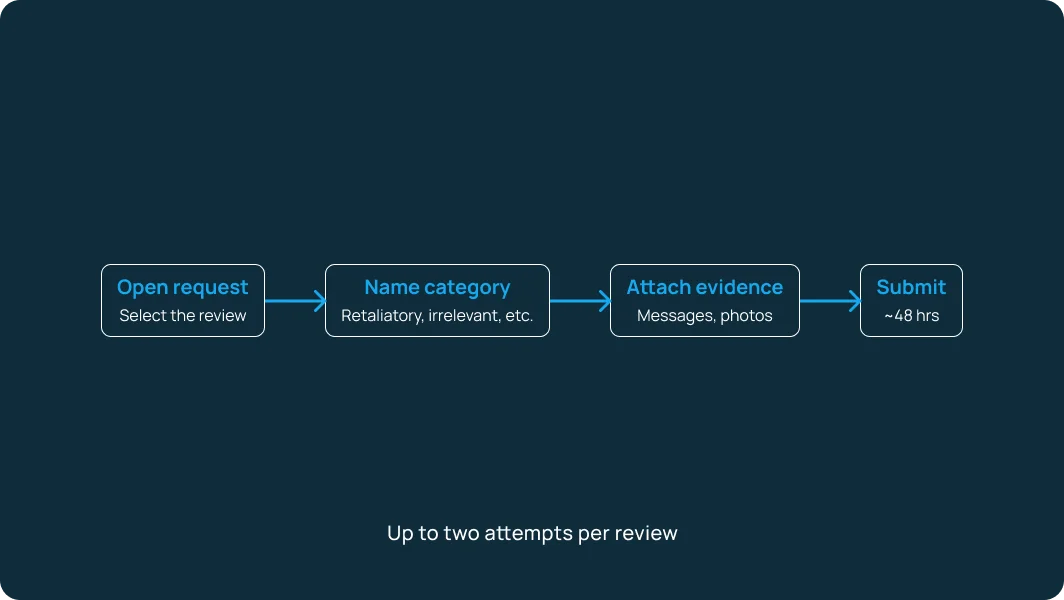
When you submit, name the exact policy category (for example, "retaliatory review" or "irrelevant to the reservation") and attach timestamped messages or photos that back it up. A request that says "this review is unfair" with no documentation almost never moves forward. One that says "this is extortion, here's the message where the guest threatened a 1-star review unless we waived the remaining balance" has something for a reviewer to actually act on.
If the first request is denied, save any new evidence for the second attempt rather than resubmitting the same information. If both attempts fail, that's your signal to stop pursuing removal and focus entirely on the public response instead.
A lot of hosting advice repeats the same claim: that you have 30 days to dispute a review before your chances "drop to near zero." That's not accurate, and it's worth clearing up because it leads hosts to either rush a weak dispute or give up on a legitimate one.
The 30-day window in Airbnb's policy applies to something else entirely: removing a review you wrote, if it no longer reflects your genuine experience. Disputing a review someone else left about you works differently. According to Airbnb's own documentation, you can request help with a review you received at any time. There's no deadline.
That said, sooner is still better in practice. Messages, timestamps, and photos are easiest to pull together while the stay is fresh, and a dispute built on solid evidence holds up better than one assembled months later from memory.
A guest who demands money, a refund, or compensation sent directly to them (Venmo, Cash App, etc.) in exchange for not leaving a bad review, or for taking one down, is a pattern worth recognizing before it happens to you.
Never send money off the platform for this. It doesn't just violate Airbnb's terms, it also removes any protection or documentation you'd otherwise have if the situation escalates. If a guest makes this kind of request, keep it in writing on the platform and treat it as exactly what it is: leverage, not a negotiation. Document everything — messages, timestamps, and photos of the property's condition, even if it feels excessive in the moment.
One tough review with a calm response attached rarely moves the needle. What affects your ranking over time is the pattern: your overall rating, how you handle feedback, and how guests describe their stays in aggregate. That's the same logic behind Airbnb's ranking algorithm.
How much impact really depends on how many reviews you already have. Airbnb calculates your overall rating as a straightforward average, so on a new listing with only 5 or 6 reviews, one bad one can drag your score below the 4.8 Superhost threshold immediately. On an established listing with 50 or 100 reviews, the same bad review barely moves the number, sometimes by only a few hundredths of a point, and a normal month of good stays absorbs it. Guest Favorite sets an even higher bar, a 4.9 average with at least 5 reviews, so the same small-sample math applies there too, often more sharply.
A good share of unfair reviews start with mismatched expectations rather than anything that actually went wrong. Accuracy is its own scored category in every Airbnb review, and an accurate, specific listing description keeps that score high and heads off a lot of these complaints before a guest ever checks in.
It's easy to fixate on the one review that stung, especially when the rest of your reviews are solid. But guests booking a stay are rarely reading in isolation. They're scrolling past a run of good reviews, checking the location, and asking whether the property actually solves what they need. A single comment sitting inside a strong, consistent track record reads very differently than the same comment on a thin one. The most reliable response to a bad review is still to keep doing what got you the good ones.
Getting a bad review removed used to be a realistic first move. Today it's the exception, reserved for a narrow set of policy violations like harassment, extortion, or reviews from guests who never stayed. For everything else, your leverage is what it's always been: respond calmly and professionally, document what happened, and report it if it genuinely qualifies. That response is what future guests actually judge you on.
No. "Unfair" or "exaggerated" on its own isn't a removal ground. The review has to fit one of the specific policy categories covered earlier, like retaliation, extortion, or content that's irrelevant to the stay. A guest's subjective take, even a harsh one, is treated as their genuine opinion.
Typically within 48 hours, though Airbnb doesn't guarantee a timeline. You'll get a decision by email either way.
No, Airbnb's double-blind system means neither side sees the other's review until both are submitted or the 14-day window closes.
You can ask, but you can't offer anything in exchange, such as a refund or a discount on a future stay, since that violates Airbnb's policy on incentivized reviews. A guest can remove a review they wrote themselves within 30 days of it publishing, but that's their call to make, not something you can trade for.
Document it anyway, but don't expect that alone to get it removed. Airbnb generally treats the review as the guest's stated experience rather than a claim it will verify against your listing details. Your best move is the same as with any other unfair review: a short, factual public response noting what's actually true, so future guests see the correction.
Managing guest communication and reviews across multiple properties takes time most owners don't have. If you'd rather hand that off to a team that does it daily, contact Triad Vacation Rentals for expert property management support.


.webp)

.webp)
.webp)
.png)



Guest Experience &
After-Hours Support: