Industry Insights
Airbnb Algorithm 2026: Ranking Factors, How to Rank Higher & Hit Top 5% in the U.S.


Updated on:
October 7, 2026


With over 9 million active listings and 5.5 million hosts on Airbnb worldwide, the competition is fierce. The platform's search algorithm has evolved dramatically. If your listing isn't optimized for it, you're invisible.
Right now, only 12.3% of eligible listings earn Airbnb's Top 10%, 5% or 1% highlight, according to AirDNA. Those homes get a gold trophy in search results, on the listing page and above the reviews. This guide shows you how to get there.
We'll break down how Airbnb's ranking system works in 2026. You'll learn what has changed this year. You'll see the specific tactics that top performers use to stand out in their local markets. Whether you're struggling to get bookings or going from good occupancy to great, these principles apply.
It all starts with a search. A guest types in a city, picks their dates and sets the number of people. In a split second, Airbnb decides which homes to show them first. Where your listing lands in that list decides whether you even get a chance at the booking.
To make that call, Airbnb looks mostly at four things: quality, popularity, price and location. It also looks at the guest. Their past trips and saved listings shape what they see, so two people searching the same city on the same dates won't get the same results.
You can't beat the algorithm, but you can give it what it looks for. When a guest sees your listing, do they click? Do they book? Do they leave happy? Get those three right and your listing moves higher. The rest of this guide shows you how.
People often call this Airbnb SEO, but it works differently from Google SEO. Airbnb's Help Center names four main factors (quality, popularity, price and location) rather than anything like backlinks or page speed. You improve your ranking by improving what the algorithm already measures: how complete and accurate your listing is, how guests respond to it and how reliably you host.
Wording still helps guests find and choose you. Guests can filter search results by amenities, and since Airbnb's September 30 fall update, guests in the US can also search in their own words and type keywords inside filters. So check every amenity you offer, and use natural phrases guests search for, like "rooftop access" or "walk to downtown," in your title and description. The eight ranking factors below cover the rest.

Some of this year's changes hit your payouts right away. Others happened quietly, in a Terms update or a feature most hosts never saw announced. In 2026, every U.S. host moved to the host-only fee, Airbnb rolled out new Terms of Service and cancellation options, guests started seeing AI highlights pulled from your reviews, hotels began showing up next to homes in search, and on September 30 Airbnb added AI search and announced new host tools. The algorithm reacts to all of it, so it pays to adjust as soon as a change lands.
Since September 15, 2026, every U.S. host pays Airbnb's 15.5% host-only fee, and guests no longer see a separate service fee at checkout. For your ranking, what matters is how you repriced. Hosts who didn't adjust earn less on every stay: a $100 booking that used to pay out about $97 now pays $84.50. Hosts who raised rates twice, by hand and through Airbnb's price adjustment prompt, now look more expensive than similar homes and lose clicks.
A quick check: search your listing in a private browser window and compare the total for a sample stay with what it cost before the switch. It should be within a few percent.
Airbnb rolled out updated Terms of Service in 2026, including more detail on how its recommendation systems rank search results. Until a host accepts the updated Terms, Airbnb blocks new bookings, so if your calendar suddenly goes quiet, check for that prompt first.
Cancellation options changed too. A new Limited cancellation policy allows free cancellation up to 14 days before check-in, and guests who book more than a week ahead get a 24-hour grace period on stays under 28 nights. A more flexible policy can make your listing easier to book, but canceling on guests yourself still counts against your reliability record.
In its 2026 Summer Release, Airbnb started using AI to pull recurring themes out of each listing's reviews, such as the location, the amenities or how family-friendly the home is. Instead of reading dozens of reviews, guests can see at a glance what past guests keep mentioning. Airbnb also announced a comparison view for homes saved to a wishlist, with an AI summary of each one side by side, coming later this year.
That puts the words in your reviews front and center. If guests keep mentioning a slow check-in or a broken hot tub, that pattern is now easier for the next guest to spot.
The same release brought thousands of boutique and independent hotels to Airbnb in 20 top destinations, including New York, with more cities coming through the year. If your home is in a big city, some of your competition in search is now a hotel room.
On September 30, 2026, Airbnb's fall update introduced AI search that lets guests describe a trip in their own words or by voice, starting in the US. Guests can also type keywords inside filters, so a search for "baby" surfaces filters like cribs and children's books and toys, and search results now show AI-written descriptions that highlight a home's key features.
For hosts, Airbnb says new tools arrive later this fall: a multi-listing calendar, interactive 3D floor plans, a dynamic pricing option that adjusts nightly prices within a range you set, and AI summaries of your earnings with suggested actions. Airbnb has not said whether any of this changes how listings are ranked. It does change how guests find a home, so a complete, accurate listing is the safest preparation.

Airbnb doesn't publish how much each factor weighs, so treat any exact percentage you see online as a guess. Below is what Airbnb itself says about each factor that shapes your search ranking, followed by what we see in practice.
Keep one more thing in mind. Airbnb says its algorithm also encourages variety, mixing different hosts, property types and price points on the same results page. No listing holds every top spot, which is why consistency across all of these factors matters more than being perfect at one.
This is the broadest factor and the one you have the most control over. It covers everything from your photos to what guests write after they check out.
Airbnb weighs photos and videos, guest ratings and reviews, host and guest messages on the platform, listing characteristics, customer service history, cancellations and amenities. Airbnb says higher-quality listings with better ratings and reviews tend to rank higher.
To be eligible, a listing needs at least 5 reviews in the past 4 years, with at least 1 in the past 2 years. Airbnb then looks at overall ratings above 4.9 on average, strong category ratings for check-in, cleanliness, accuracy, communication, location and value, and host cancellations and quality-related issues below 1% on average. The full list is in Airbnb's Guest Favorites help article.
Superhost rates the host, while Guest Favorite is awarded per home, refreshed daily and available as a search filter. Our comparison of which badge matters more covers the difference.
Send every guest a welcome message with local tips and a short pre-arrival checklist. It sets expectations before they arrive, which is where most 4-star category ratings come from. Focus hard on cleanliness, accuracy and check-in. Across our portfolio, those three categories are where a single weak stay costs the most.
The stars are only part of it. Airbnb weighs what guests write in their reviews and your messages with them, so the words matter along with the rating. A 5-star review that mentions a dirty oven still tells Airbnb something.
Reviews work both ways. Leaving thoughtful reviews for your guests keeps the review cycle moving.
A short checkout message that thanks the guest and reminds them reviews close after 14 days brings in more reviews than silence. Many hosts automate their own reviews of guests through their management software. What you can't do is offer anything for a review. Airbnb's reviews policy doesn't allow reviews to be given or withheld in exchange for a discount, refund or anything else of value.
Price is one of the few factors Airbnb calls out by name, and it's the easiest one to change today. The catch is that Airbnb doesn't compare you to the whole city. It compares you to homes like yours, on the same dates.
Airbnb looks at the total price before taxes, including fees and discounts, and how it compares to similar listings in the area for the same dates. Airbnb says listings priced below comparable homes with similar guest capacity and amenities tend to rank higher.
With the 15.5% host-only fee, keeping the same payout means dividing your target payout by 0.845. That works out to roughly 18% more on the guest-facing price. The problem is that raising every night by 18% can push you above your comps, and that costs visibility. The answer is pricing each date on its own, not one flat increase.
Price by date and demand, not by season alone. Compare your total price (nightly rate plus cleaning fee) to homes with the same capacity for the same dates, not to the city average. Use weekly and monthly discounts of 10% or more, since Airbnb shows those to guests in search. For dates that aren't filling, Airbnb's own ranking tips point to Early Bird and Last Minute discounts and a non-refundable rate option at 10% off, which is displayed to guests.
If you'd rather let software handle it, the main dynamic pricing tools for vacation rentals each take a different approach to setting nightly rates.
Popularity is how the Airbnb algorithm asks one question: do guests want this home? It's the factor most hosts never measure, even though Airbnb shows it to you in your own dashboard.
Airbnb looks at how often guests book your listing, visit your listing page and add it to their wishlists. Airbnb says more popular listings tend to rank higher. That popularity is earned in search results before a guest ever opens your listing. Your cover photo, title and displayed price decide whether they click. Your photos, description and reviews then decide whether they book.
Airbnb shows this funnel in your hosting dashboard under Insights > Performance > Conversion, in three stages: first-page search impressions, search-to-listing conversion (guests who click through) and listing-to-booking conversion (guests who book). You can compare each stage to similar listings in your area.
An IntelliHost and Uplisting analysis of U.S. listings published in May 2026 found a median of one booking for every 47 first-page search impressions. About 53% of guests who see a listing on the first page never click, and about 96% of those who click never book.
Each weak stage points to a different fix. Low impressions usually mean price or availability. Guests seeing you but not clicking points to your cover photo, title or displayed price. Guests clicking but not booking points to your photos, description, reviews or total price. If you get plenty of views but few bookings, you have a conversion problem.
Airbnb says its algorithm is designed to make sure new listings show up well in search, and it offers a New Listing Promotion with 20% off your first three bookings. That gives you a head start before you have any bookings or reviews. How long it lasts depends on your first reviews and how you use that first window.
Treat your title and first photos as an ad. Airbnb titles are limited to 50 characters, so put your strongest selling point first, like "Lakefront 3BR w/ Private Dock," instead of generic words like "Cozy." Your cover photo should show that same feature (a hot tub with a view, a dock, a pool), not a bathroom or hallway.
Then make sure the description delivers on it. The best vacation rental descriptions repeat that standout feature in the first line and back it up with specifics.
Photos are usually the first thing a guest judges, and your listing details decide whether you even show up when they filter. Both are fully in your hands.
Airbnb looks at high-quality photos and videos, listing details and amenities.
Aim for 25 to 40 real, well-lit photos, fill out every field in your listing, and check every amenity you actually offer, and nothing you don't. Guests can filter search results by amenities, so an amenity you offer but didn't check can keep your listing out of those searches.
Order your photos with intent: exterior or curb appeal, living room, kitchen, main bedroom, bathroom, then your standout amenity. Use natural phrases guests search for, like "rooftop access" or "walk to downtown," in your description. If you shoot the photos yourself, shoot in daylight and straighten every vertical line.
For many homes, this is the fastest improvement available. Our professional photography and staging team can handle it for owners who want it done right the first time.
Guests want answers fast, and the Airbnb algorithm pays attention to how quickly you give them. Instant Book takes that one step further by removing the wait altogether.
Your response rate affects Superhost status and search placement, especially for listings where guests have to request to book. Airbnb also notes that turning on Instant Book can positively affect your response rate, which can improve your placement in search results.
Reply to guest inquiries in under an hour, including evenings and weekends. Set up saved messages for the five questions you get most often.
Turn on Instant Book and add Airbnb's optional Good track record requirement, which limits Instant Book to guests who have completed a stay without incidents or bad reviews. You can also add a pre-booking message with questions every guest has to answer. Review your advance notice and preparation time too, since Airbnb notes that booking settings can affect how your listing appears in search.
Instant Book also matters to guests directly. When we looked at how U.S. guests choose on Airbnb, Vrbo and Booking.com, friction at the booking step was one of the fastest ways to lose a guest.
Airbnb can only show your home for dates it's actually open. The more searches your calendar can match, the more chances you get to rank.
The more dates your listing is open, the more searches it can match. Airbnb says the same applies to flexibility on how long guests can stay.
Keep your calendar open as far out as you can price it well. Avoid long minimum stays unless your market clearly supports them. A 2-night minimum on weekends with discounts for 7+ nights works for most homes we manage.
One or two open nights between bookings rarely sell at your normal minimum stay, so let shorter stays fill them or lower the rate for those dates. Every gap you fill adds a booking and keeps your calendar active.
Set clear weekly and monthly discounts and make sure your listing shows a real workspace, fast Wi-Fi and laundry. Mid-term guests book on those details. Triad homes also reach corporate travelers through Livily, which connects vacation rentals to corporate booking systems.
Airbnb wants guests to arrive at exactly the home they booked. Every cancellation or complaint tells it your listing might not deliver.
Host cancellation rate, quality-related incidents reported to Airbnb customer service and a high review removal rate all count against Guest Favorite eligibility.
Never cancel on a confirmed guest unless you truly have to. Fix recurring issues (Wi-Fi, check-in instructions, hot water) before they turn into support tickets. Use review disputes only when a review truly breaks Airbnb's policy. When a guest sent exaggerated complaints and demanded a full refund, calm, documented replies helped one owner settle at a 35% refund.
Knowing when to dispute a bad review, and when a professional public response works better, protects both your rating and your record.
Location is the one factor you can't change. What you can change is how clearly your listing shows guests where they'll be.
Location has a large effect on search results. Airbnb says homes in places guests like to stay, such as near popular landmarks, tend to rank higher.
Check that your map pin is exact. Name nearby landmarks, trailheads, beaches or downtown areas in your title and description, with real distances.
Run through this checklist with your listing open. It takes about 20 minutes, and every "no" is a place you're likely losing visibility. Run it once for each of your listings, since the weak spots are rarely the same from one home to the next.

Knowing the ranking factors only helps if you apply them every week. These are the gaps we see most often when owners come to us.
Smart Pricing is Airbnb's built-in pricing tool. In our experience, it tends to fill dates rather than protect your payout, and that gap got bigger once the host-only fee arrived.
The fix: Use dynamic pricing that adjusts to demand, season, events and your real comps, and review it every week.
Pricing, messaging, reviews, cleaners and maintenance add up quickly, even for one home. When a host gets stretched thin, the first things to slip are response times and photo updates. Those are ranking factors.
The fix: Decide early which parts you'll handle and which you'll hand off.
Many hosts overpromise without meaning to. An old photo, an amenity that's broken, a "5 minutes to the beach" that's really 15.
Result: Guests arrive expecting more. The accuracy rating drops, and so does your ranking.
The fix: Stay in your own home as a guest would. Make sure every photo, description and amenity claim is 100% accurate. Set expectations you can exceed.
Many hosts have rules (no extra guests, no parties, no smoking) but don't enforce them. Guests test boundaries. Damage, disputes and cancellations follow.
Result: Quality incidents that count against your record.
The fix: Put clear rules in your listing, use guest requirements and enforce them consistently. A clear set of house rules that protect your property is easier to enforce, and there's a free template to start from.
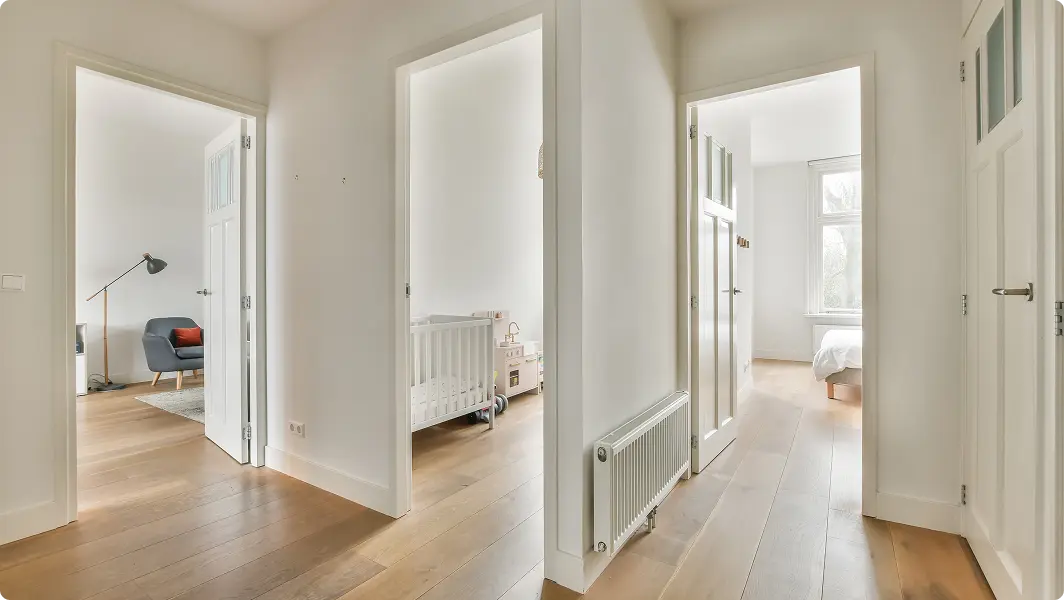
Different homes win on different details. Here are title examples and what we prioritize for each property type.
How to use this: Find your property type. Adapt the title formula to your home and keep it within Airbnb's 50-character title limit. Prioritize the photos and amenities listed, then adjust minimum stay and pricing to your market.

You can apply everything above yourself. Most hosts who do it well use a small set of tools, each covering one part of the work.
These tools set a rate for each night from local demand, events and booking pace. You still set the rules, like minimum prices and stay lengths, and review the results every week.
These tools sync your calendar across Airbnb, Vrbo and Booking.com, prevent double bookings and keep your listing details consistent on every channel.
Scheduled messages handle booking confirmations, check-in steps, common questions, checkout reminders and review requests, so response times stay fast even at night. Enso Connect is the platform we use to run guest messaging across our homes.
This is often the single biggest improvement for a listing that looks dated or was shot on a phone at night.
You can search for your own listing in a private browser window, using your city, real dates and a typical group size, or use a rank tracking tool. Manual checks don't show trends, so decisions end up based on a single snapshot.
Each tool solves one part, but someone still has to connect them, watch the results and handle guests, cleaners and maintenance. DIY works if you're consistent and experienced. Most owners don't have the time to be both.
Triad handles the full optimization for every home we manage:
Your cost: a management fee of 10% to 15%. No tools to buy and no hours from you.
The difference: DIY needs your constant attention and several tool subscriptions. With our full-service listing management, you stay informed without doing the work.
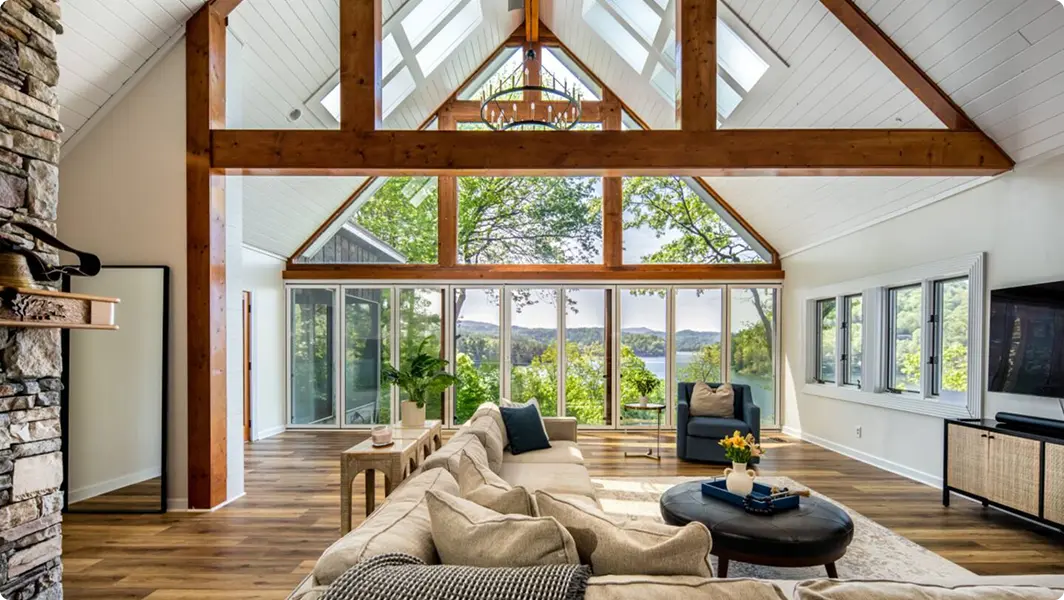
Here's what the ranking factors look like when they're applied consistently. These are real homes from the Triad Vacation Rentals portfolio.
A Cashiers mountain cabin earned the Guest Favorite badge within 90 days of joining Triad and generated over $30,000 in revenue, after three struggling years under previous management. The changes: professional photos, a complete listing and strategic positioning. Why it worked: Photos earn the click, and accurate listings earn the ratings that follow.
A Massachusetts farmhouse had a fire pit, creek access and antique furniture, but a generic title, bare photo captions and a basic amenities list. Triad rewrote the title, captions, amenities and description around what made the home different, and the owner now reports it is very booked. Why it worked: A complete, specific listing shows up in more searches and gives guests a reason to click.
The owner of a family vacation home expected about $2,800 a month. With dynamic pricing and hands-on management, it earned nearly $7,000, and one corporate contract added $84,500 in total value. Why it worked: Airbnb rewards a competitive price for the dates guests search.
A brand-new Jamestown 7-bedroom property started with zero reviews. Within 12 months, price ramping, new-listing promotions and continuous adjustments brought it to over $151,000 in revenue and full occupancy. Why it worked: It used the new-listing window as Airbnb designed it, then let reviews carry the ranking.

Listing quality and reviews, price compared to similar homes for the same dates, popularity (views, wishlists and bookings), photos and listing completeness, responsiveness, availability and stay flexibility, reliability and location.
First, Airbnb narrows the results to listings that fit the guest's search: location, dates, number of guests and any filters they pick. Then it orders the homes that fit, weighing quality, popularity, price and location, along with the guest's own history, like past trips and saved listings. It also mixes in different hosts and price points so one page isn't all the same kind of home. That's why your position can change from one guest to the next.
Partly. Airbnb's Help Center names the factors with the biggest impact (quality, popularity, price and location) and explains that availability, stay flexibility, photos and booking settings play a role too. It doesn't publish a full list or how much each factor weighs. Airbnb has also walked professional hosts through how search works, including at the Airbnb Host Summit 2025.
Improve how often guests click and book your listing. Put your best feature in your cover photo and the first words of your title. Turn on Instant Book. Reply to guest inquiries in under an hour. Keep your total price competitive with similar homes for the same dates, keep your calendar open further out and earn strong ratings in every review category. The checklist above covers each step.
Usually something changed on your side or in your market. Your total price may now be higher than similar homes, often after the host-only fee switch. A recent weak review or a cancellation may have hurt your quality or reliability. Your calendar may have fewer open dates, or you may not have accepted Airbnb's updated Terms, which blocks new bookings. New listings and hotels in your area can also push you down. Start with Insights to see which stage dropped: impressions, clicks or bookings.
Turn more of your views into bookings. Check Insights to see where guests drop off, make sure your photos and description match what the title promises, price each date against similar homes and use Airbnb's discounts for dates that aren't filling. Strong recent reviews close the deal, so a clear pre-arrival message matters as much as the listing itself.
You can't beat it, but you can give it what it looks for. The algorithm rewards homes that guests click, book and review well, and the eight ranking factors above show how to deliver on each one.
Airbnb SEO means improving the signals Airbnb's own search measures, not optimizing a page for Google. In practice, that's the eight ranking factors above. The parts closest to classic SEO are your title and description, where natural phrases guests search for belong, and your amenities, which should all be checked so your listing shows up when guests filter.
There's no official cutoff, but ratings clearly matter: Airbnb says listings with better ratings and reviews tend to rank higher. Guest Favorite looks for an average above 4.9, and Superhost needs 4.8. A 4.75 is a solid rating, but it's below both, so look at which categories are pulling your average down.
Guest Favorite rates the listing, while Superhost rates the host. Guest Favorite is awarded per listing, refreshed daily, and guests can filter search to see only Guest Favorites, which makes it the more visible of the two in search.
Listings with at least 5 reviews in the past 4 years, including 1 in the past 2 years, may qualify for a top 1%, 5% or 10% highlight. Airbnb compares eligible listings on ratings, reviews and reliability. Meeting the review threshold makes a listing eligible, not automatic.
Airbnb says turning on Instant Book can positively affect your response rate, which can improve your placement in search. It also removes a step for guests, which helps conversion.
Airbnb says its algorithm is designed so new listings show up well in search, and it offers a New Listing Promotion with 20% off the first three bookings. After that, early reviews decide how well the listing holds its position.
Not directly. The fee itself isn't a ranking factor, but price is. If you raised rates to cover the fee and ended up above similar homes for the same dates, you can lose visibility. Hosts who raised prices twice, by hand and through Airbnb's price adjustment prompt, were hit hardest. Make the adjustment in one place only and check your total price against similar homes.
Starting in the US, Airbnb's September 30 fall update lets guests search in their own words or by voice and type keywords inside filters. For example, "baby" surfaces filters such as cribs and children's books and toys. Airbnb has not said how this changes ranking, so the practical step is the same: check every amenity you offer and describe your home in the plain words guests use.
It can. Airbnb says the more flexibility you offer on length of stay, the more searches your listing can match. A very long minimum filters you out of shorter searches. Keep it no longer than your market needs.
Keep your calendar open as far ahead as you can price it well, fill one- or two-night gaps with shorter stays or lower rates, and offer weekly and monthly discounts of 10% or more. Airbnb says the more dates and stay lengths you offer, the more searches your listing can match.
Offer weekly and monthly discounts, keep your minimum stay flexible and make the details mid-term guests look for easy to spot: a real workspace, fast Wi-Fi, laundry and a full kitchen. Airbnb shows weekly and monthly discounts of 10% or more to guests in search, which helps longer stays find you.
There's no official benchmark. An IntelliHost and Uplisting study of U.S. listings found a median of about one booking per 47 first-page search impressions, roughly 2%. Airbnb's Insights dashboard lets you compare your own conversion to similar listings, which is the more useful benchmark.
Yes. The main categories are dynamic pricing tools, property management software with a channel manager, guest messaging automation, professional photography and staging, and rank tracking. A full-service manager combines all of them for you.
The Airbnb algorithm rewards homes that guests book and enjoy. In practice, that means five habits:
Start with one. Photos and your title usually give the fastest return, then pricing, then response times. Results depend on your market, your home and how consistently you apply the changes.
The homes at the top of Airbnb search are managed in line with how the algorithm works.
Want us to run this audit on your home? Book a call with our team.



.webp)


.webp)
.webp)
.png)


Guest Experience &
After-Hours Support: